

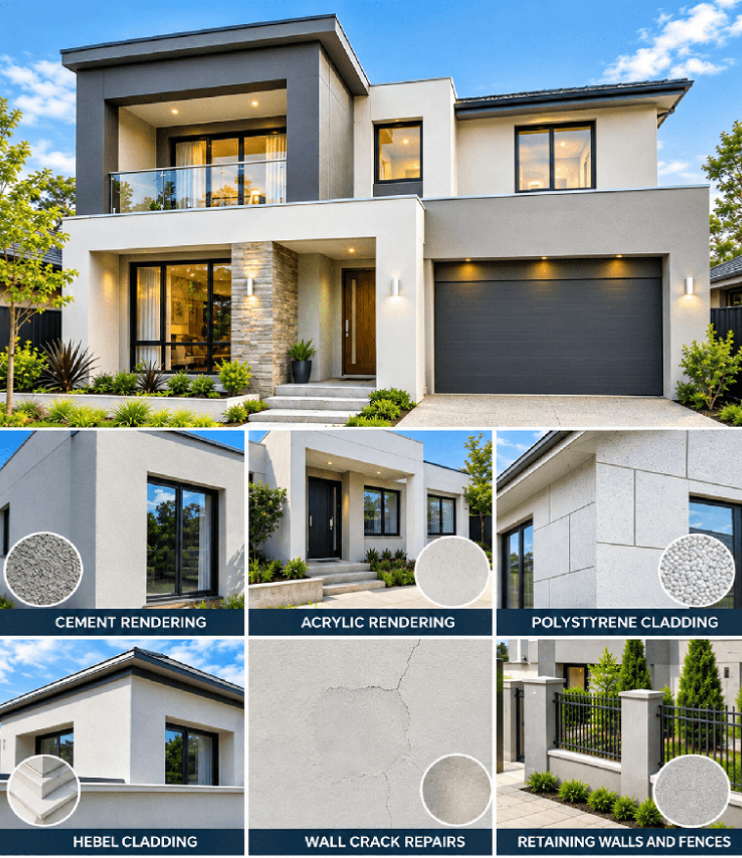
Exterior rendering can dramatically change the appearance of a home, but it is not simply a matter of applying a new coating over an existing wall. The condition of the substrate, exposure to weather, choice of materials and preparation process all affect how well the finished surface performs over time.
For homeowners considering Melbourne exterior rendering, understanding these factors before work begins can make the planning process much easier. A well-prepared project is more likely to produce a consistent finish that complements the property and responds appropriately to local conditions.
Start With the Existing Wall Condition
Before choosing colours or textures, the wall itself needs to be assessed. Older masonry can contain cracked mortar, loose sections, previous patches or painted surfaces that affect how new render will bond.
Moisture should also be considered. If water is entering through damaged gutters, leaking downpipes or another building issue, simply covering the wall will not solve the cause. Existing problems should be identified first so the render is applied to a stable and properly prepared surface.
The same applies to damaged areas. Small cracks may require repair, while larger or recurring cracks could indicate movement that should be investigated before cosmetic work begins.
Different Surfaces Need Different Preparation
Not every exterior wall behaves in the same way. Brick, concrete, blockwork and lightweight cladding can each require a different approach.
Even within one property, homeowners may find several materials. An extension added years after the original house, for example, might use a different substrate from the front façade. Applying one preparation method to every wall without considering these differences can create problems later.
A professional assessment helps determine whether cleaning, priming, repair work, reinforcement or another preparation step is required before the render system is installed.
Consider Melbourne’s Changing Weather
Exterior walls are continually exposed to temperature changes, wind, rain and direct sunlight. Melbourne’s variable weather makes material selection particularly important.
Some walls receive strong afternoon sun, while others remain shaded and damp for longer periods. Areas close to gardens can also experience splashback and moisture around the base of the wall.
These conditions should influence both the type of finish and how the surrounding property is managed. Good drainage, functioning gutters and suitable ground levels all contribute to protecting rendered surfaces.
Choosing Between Cement and Other Render Systems
Cement-based render remains a widely used option for suitable masonry surfaces. It can create a strong, uniform base and is commonly applied to brick, concrete and block walls.
When researching Cement rendering services, homeowners should consider the substrate and desired finish rather than assuming one product is appropriate for every wall. Traditional cement render and polymer-modified or acrylic systems can behave differently depending on the building and application.
The final selection should account for flexibility, surface type, exposure and the appearance the homeowner wants to achieve.
Texture Can Change the Character of a Property
Rendering gives homeowners more design options than simply hiding brickwork. The final surface can be relatively smooth or have a more pronounced texture, depending on the chosen system and style of the building.
A restrained finish may suit a contemporary façade with simple lines. A slightly textured surface can work well on larger wall areas where a completely smooth finish might appear too flat.
It is also worth viewing the proposed finish alongside existing elements such as windows, roofing, garage doors and fencing. Exterior finishes tend to look most successful when they form part of one coordinated design.
Plan Other Exterior Work at the Same Time
Rendering is often carried out alongside broader renovation work. If exterior lighting, windows, plumbing fixtures or structural alterations are also being changed, their timing should be coordinated.
Completing disruptive work first can prevent newly rendered surfaces from being cut, drilled or repaired immediately afterwards.
Homeowners may also want to inspect fascia boards, gutters, downpipes and external sealants before rendering. These relatively small details can affect the appearance and long-term condition of the completed façade.
Maintenance Still Matters After Rendering
A rendered exterior is not completely maintenance-free. Walls should occasionally be inspected for staining, cracking, damaged sealants and areas where water regularly runs down the surface.
Keeping gutters clear and ensuring garden irrigation does not constantly wet the wall can help minimise unnecessary moisture exposure. Dirt and organic growth may also need appropriate cleaning depending on the position of the property.
Small issues are usually easier to address when noticed early rather than after they have spread across a larger area.
Conclusion
A successful exterior rendering project starts well before the final coat is applied. Wall condition, surface preparation, drainage, material compatibility and weather exposure all deserve consideration during the planning stage.
Homeowners who approach rendering as part of the wider condition and design of their property are better placed to achieve a cohesive result. By assessing the existing walls carefully and selecting an appropriate system, the updated exterior can feel like a considered renovation rather than a temporary cosmetic change.