

A childcare centre uses cleaning consumables across very different spaces: play areas, bathrooms, nappy-change areas, kitchens, staff rooms and entrances. Buying everything under a generic “cleaning” category can make it difficult to control stock or ensure products are being used for the correct task.
A more useful approach is to organise childcare cleaning products around cleaning zones and established centre procedures. Turnstone Products currently maintains a childcare-focused supply category that brings together consumables used in this type of environment.
Divide the Centre Into Cleaning Zones
Create a list of areas before creating a product list.
For example:
-
Activity rooms
-
Bathrooms
-
Nappy areas
-
Kitchen
-
Sleep rooms
-
Outdoor areas
-
Staff facilities
-
Reception
Different zones can then have appropriate cloths, chemicals, gloves, liners and paper products assigned to them.
Separate Cleaning From Disinfection
Removing visible dirt is not automatically the same as completing a disinfecting step.
Follow relevant workplace procedures, product labels and childcare hygiene guidance for when each process is required.
Use the Correct Product for the Correct Surface
Tables used by children, bathroom floors and kitchen preparation areas can require different considerations.
Avoid Unlabelled Decanting
If products are transferred into approved working containers, ensure workplace labelling requirements are followed.
Staff should never have to guess what is inside a spray bottle.
Build a Core Consumables List
Common daycare cleaning supplies may extend far beyond chemicals.
A centre might need:
-
Hand towels
-
Toilet tissue
-
Bin liners
-
Gloves
-
Cleaning cloths
-
Appropriate surface products
-
Hand-hygiene consumables
-
Nappy-disposal supplies
-
Kitchen consumables
-
Dispensers
Grouping these into a recurring order can reduce administrative work.
Consider High-Use Items Separately
Some products are consumed much faster than others.
Paper towel, gloves and bin liners may require more frequent ordering than specialist chemicals.
Track carton usage for several weeks rather than guessing.
Set Reorder Points
A simple rule such as “reorder when two unopened cartons remain” can prevent emergency purchasing.
The correct buffer depends on:
-
Delivery frequency
-
Storage
-
Consumption
-
Centre size
-
Seasonal demand
Review Dispenser Compatibility
Buying the wrong refill is a surprisingly common procurement problem.
Before ordering childcare cleaning supplies such as hand towels, soap or roll products, record the dispenser model or refill dimensions.
Standardising dispensers can simplify future purchasing.
Think About Storage
Bulk buying only works if supplies can be stored safely and practically.
Keep cleaning chemicals:
-
In designated areas
-
Away from children
-
According to label requirements
-
Separated where necessary
-
With safety information accessible
Paper goods also need dry storage.
Do not fill every cupboard simply because bulk prices are attractive.
Train Staff Around the Product List
Procurement and training should connect.
A new employee should be able to identify:
-
Which cloth is used where
-
Which product suits each task
-
Required dilution
-
Where PPE is stored
-
What to do if stock runs low
Clear systems reduce improvisation.
Consolidate Ordering Where It Helps
A centre buying toilet tissue from one supplier, liners from another and towels from a third may spend unnecessary time managing separate deliveries and invoices.
A supplier offering several childcare cleaning supplies categories can make consolidation possible where product suitability and pricing align.
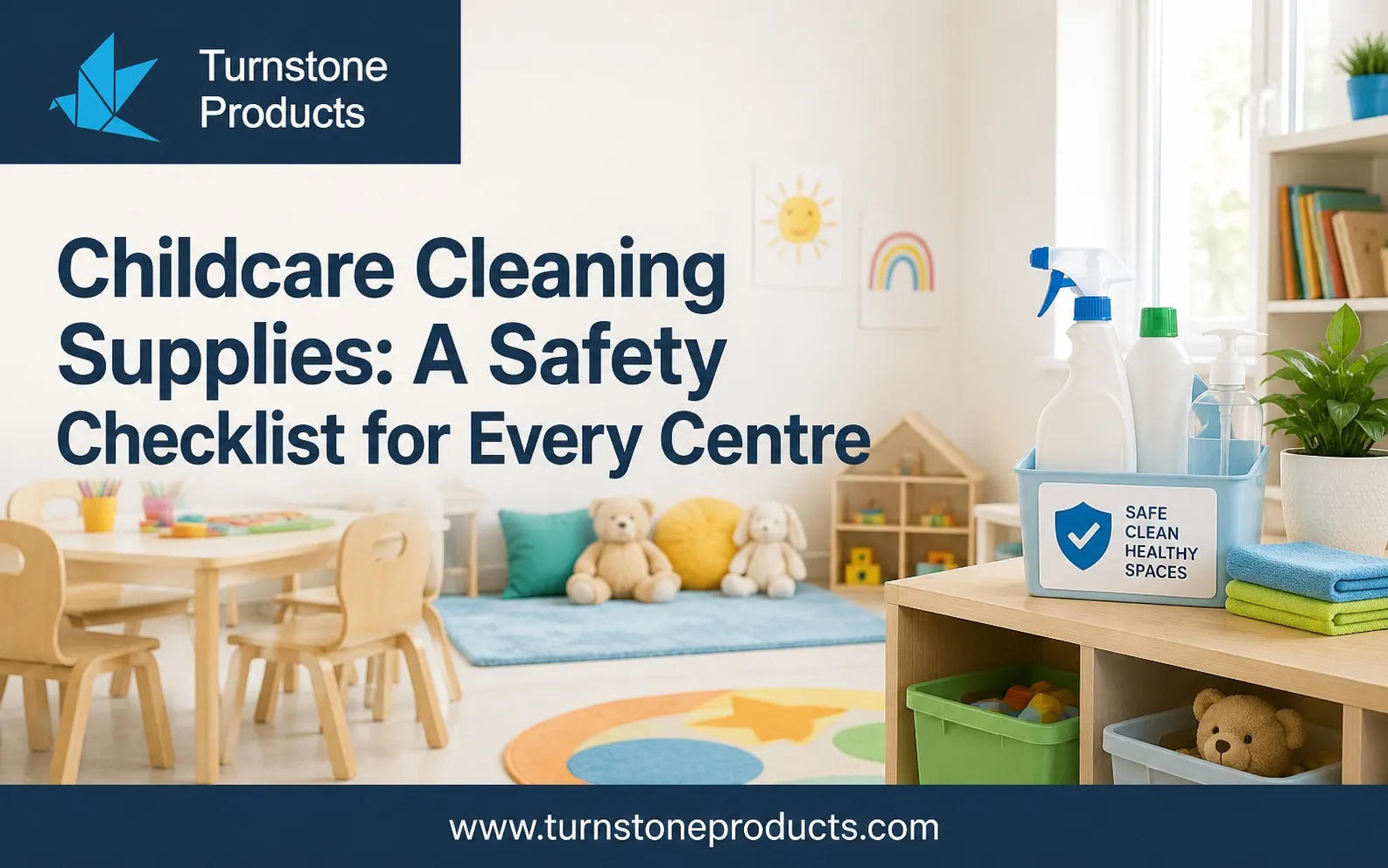
Turnstone’s website lists a range of cleaning and workplace consumables for childcare customers.
Why Choose Us
Turnstone Products has a dedicated childcare category alongside its broader commercial range, which includes chemicals, bin liners, hand towels, gloves, wipes, toilet rolls and dispensers.
This allows centres to consider daycare cleaning supplies as one operational system rather than a series of unrelated purchases.
About Us
Turnstone Products supplies workplace and facility consumables to commercial customers in Western Australia. Its catalogue includes products relevant to childcare, hospitality, medical and other operating environments.
Childcare services can use the range to organise childcare cleaning products by routine needs and consumption.
Conclusion
A childcare cleaning supply list works best when it reflects actual rooms, tasks and usage rates.
Group childcare cleaning supplies by zone, check dispenser compatibility and track high-use products. A structured system can help staff find what they need while making purchasing easier to manage.