

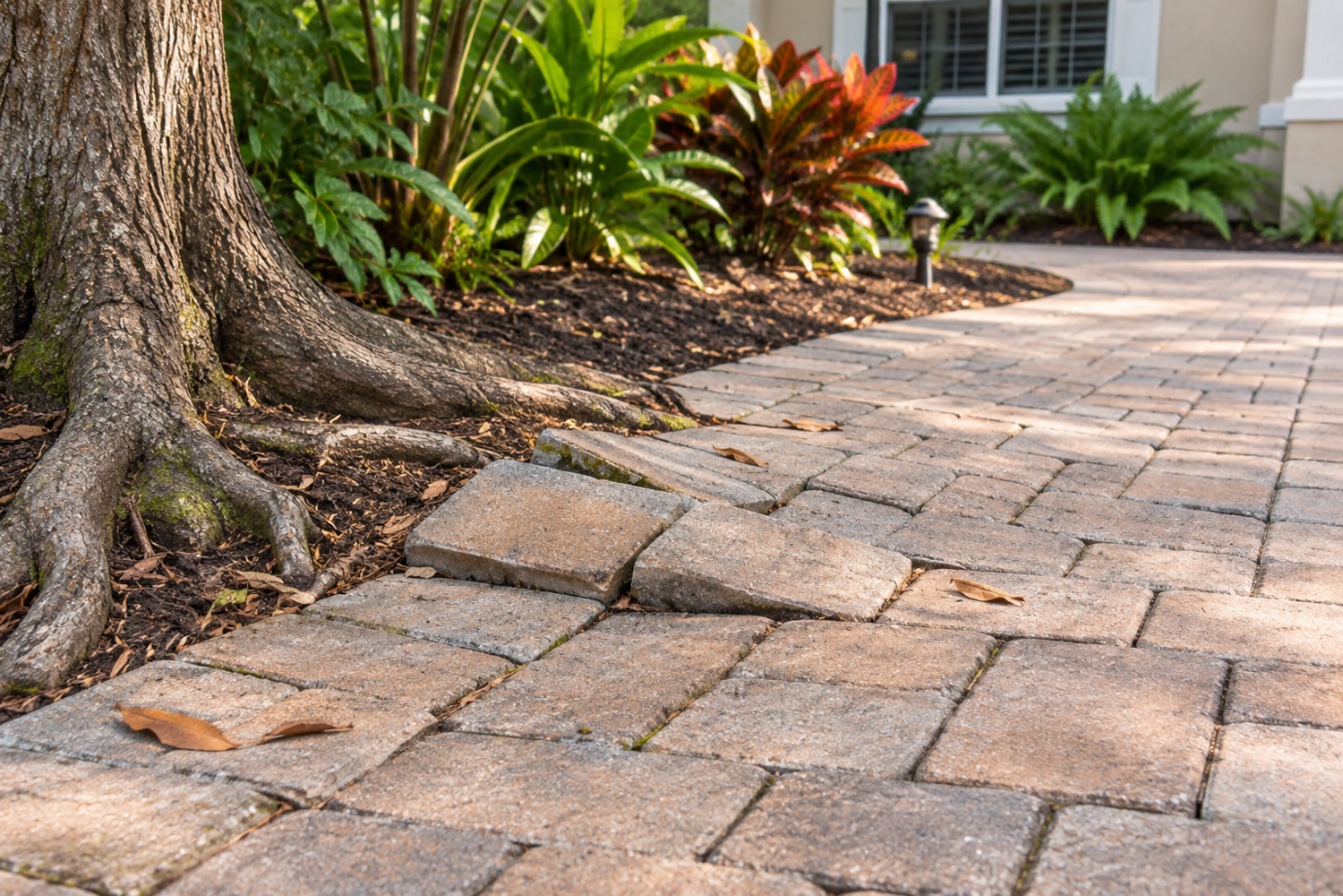
A beautiful landscape can gradually become a source of trouble for the paved areas surrounding a home. Trees grow, roots spread, and garden beds change as plants mature. Although these developments are natural, they can affect nearby patios, walkways, and outdoor seating areas.
In Southwest Florida, where warm weather supports year-round plant growth, homeowners should pay attention to how landscaping interacts with existing paving. Understanding the relationship between vegetation, soil conditions, and paved surfaces can help identify potential damage and guide practical maintenance decisions.
Why Tree Roots Can Disturb Existing Pavers
Tree roots generally expand through areas where moisture, oxygen, and growing space are available. When roots encounter paving systems, they may grow beneath individual units or along their edges. As roots increase in size, they can displace supporting materials and contribute to raised or uneven surfaces. However, not every paving problem near a tree is caused by roots. Settlement, poor drainage, and inadequate base preparation can create similar symptoms.
Identifying the actual cause is important before selecting a repair method or modifying nearby landscaping.
Recognizing When Landscaping Affects Paving Stability
Changes in paving often develop gradually. Homeowners may first notice a slightly raised edge or an individual paver that moves underfoot. Over time, these irregularities can become more noticeable. Those considering paver repair in Naples, FL should examine surrounding vegetation alongside the condition of the paved surface.
Roots are not the only concern. Irrigation leaks, poorly directed runoff, and repeated soil disturbance around planting beds may also contribute to movement. A professional assessment can help distinguish between localized paving damage and problems involving the underlying support.
Landscaping Decisions That Help Protect Paved Areas
Thoughtful planting and maintenance can reduce potential conflicts between vegetation and outdoor paving. Several practical measures deserve consideration:
-
Allow appropriate planting distances: Consider the mature size and root characteristics of trees before placing them near paved surfaces.
-
Review irrigation placement: Avoid directing excessive water toward vulnerable paving edges or supporting materials.
-
Monitor surface changes: Watch for lifted units, widening joints, and recurring uneven areas.
-
Maintain drainage routes: Keep nearby outlets and landscaped drainage areas clear of accumulated debris.
-
Plan future access: Allow space for landscaping maintenance without repeatedly disturbing existing paving.
These practices support better coordination between landscaping and hardscape features. However, no planting arrangement can guarantee that movement or future repairs will never occur.
Choosing Materials for Landscaped Patio Areas
Outdoor patios frequently sit near lawns, gardens, and established trees. Their materials should be selected with the surrounding environment in mind. Homeowners interested in stone patios in Naples, FL should consider surface texture, drainage requirements, maintenance needs, and compatibility with nearby vegetation.
Natural stone offers distinctive visual characteristics, although individual varieties differ in durability and moisture sensitivity. Some stones may also require material-specific cleaning or sealing. The chosen installation system should accommodate expected use while maintaining appropriate connections with surrounding landscape features.
Understanding Repair Options Before Removing Trees
Discovering raised pavers near a tree does not automatically mean the tree must be removed. The appropriate response depends on root location, paving condition, and potential consequences for tree health. In some situations, individual paving units may be lifted while the supporting materials are evaluated and corrected. Other cases may require design adjustments or professional advice about root management.
Cutting major roots without qualified guidance can damage a tree or affect its stability. Coordination between a paving professional and a qualified arborist may be appropriate when significant roots are involved.
How Garden Renovations Can Create New Problems
Landscape renovation projects sometimes introduce unexpected changes to existing paved areas. New irrigation systems, raised planting beds, and altered ground levels can affect how water moves across a property.
For example, adding soil against a patio edge may change drainage patterns or bury important construction details. Redirecting sprinklers can also increase moisture exposure in areas that previously remained relatively dry.
Before beginning landscaping work, homeowners should examine nearby paving and discuss how the proposed changes may influence existing drainage and surface elevations.
Keeping Landscaping and Hardscaping in Balance
Maintaining outdoor paving requires regular observation rather than assuming that attractive surfaces will remain unchanged. Seasonal inspections can reveal movement, joint deterioration, and water accumulation. Cleaning should follow the paving material’s requirements, while repairs should address the source of damage whenever practical.
Homeowners should also document recurring problems with photographs. This information can help professionals understand how conditions have developed and whether additional investigation is necessary.
Conclusion
Healthy landscaping and stable paving can coexist when homeowners understand how roots, moisture, and soil conditions interact. Careful planting decisions, suitable drainage, regular inspections, and timely repairs can help reduce avoidable damage. Before removing trees or replacing paving materials, the underlying cause of movement should be evaluated. Homeowners seeking guidance on paver repairs and natural stone outdoor improvements in Southwest Florida can explore naplesprecast.com to learn more about available services and practical considerations for maintaining residential outdoor surfaces.