

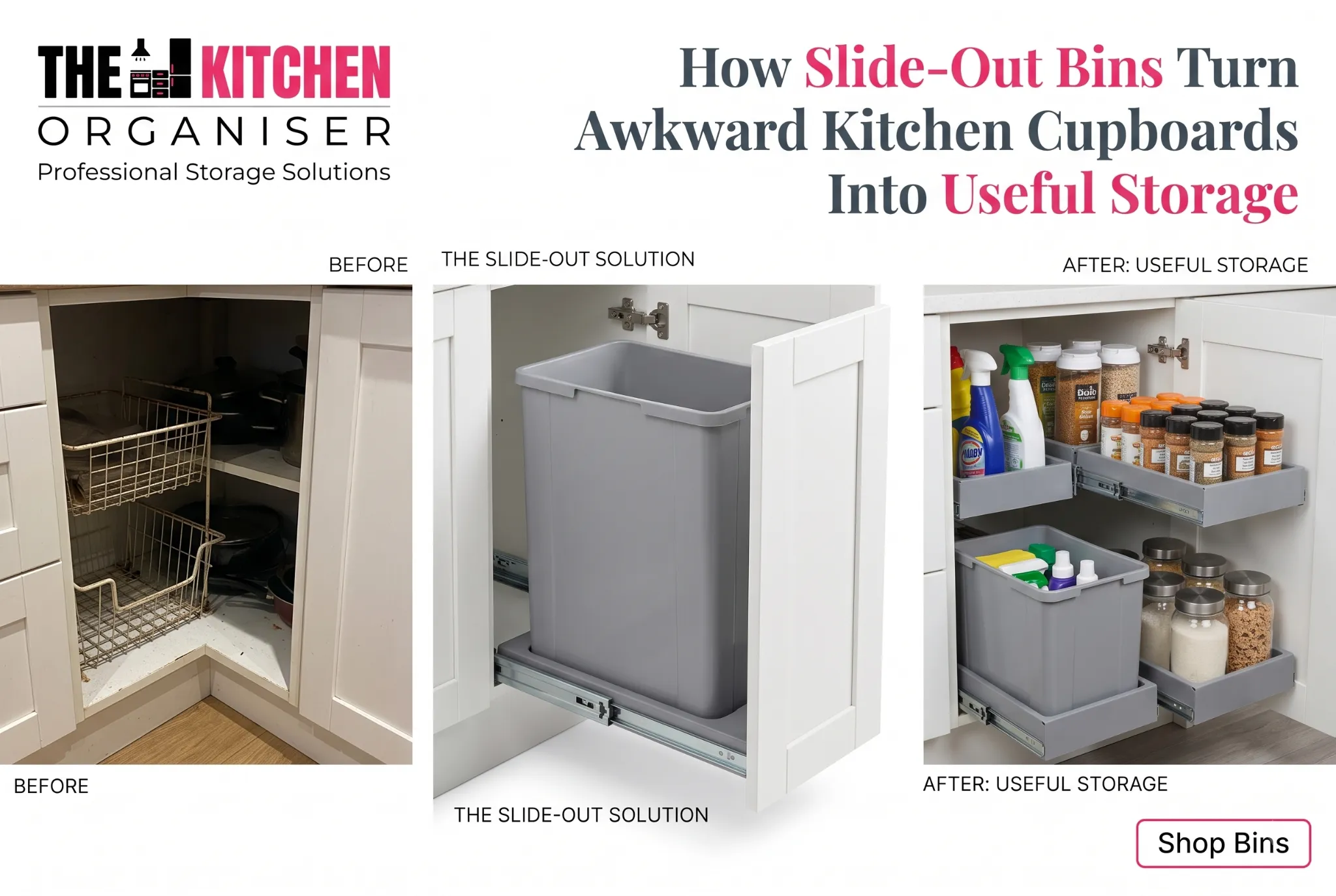
Deep lower cupboards often look spacious until you try to use them. Items disappear towards the back, rubbish containers are difficult to reach and valuable cabinet space can become cluttered.
Installing cupboard bins can give that space a clearly defined purpose. Instead of placing a loose container somewhere inside the cabinet, a slide-out system creates controlled movement and brings the waste container towards the user.
Why Deep Cabinets Become Difficult
Cabinet depth is useful for storing large cookware, but it can be inconvenient for a frequently used bin.
A loose rubbish container at the rear may require bending and reaching several times a day. If cleaning products are stored in front, the arrangement becomes even less practical.
A pull-forward mechanism changes how the space is accessed rather than simply changing what is stored there.
Creating a Dedicated Waste Zone
A kitchen bin cabinet keeps waste storage in one predictable place and reduces the need for a freestanding floor bin.
Kitchen bin cabinet layouts can work particularly well near food-preparation areas because scraps and packaging can be discarded without crossing the kitchen.
The surrounding cabinetry also keeps the waste container visually concealed when the system is closed.
How Slide-Out Movement Helps
The key advantage of slide out bins is accessibility.
Rather than reaching into a deep cupboard, the user pulls the system forward. This can make it easier to open the container, remove full liners and clean individual buckets.
Slide out bins are especially useful where the cabinet would otherwise have an awkward or poorly used rear section.
The Mechanism Needs Clear Space
A slide-out product does not use only the space occupied by the bucket.
Check the full travel path
Measure the frame and runner dimensions and ensure cabinet hinges or adjacent fittings do not obstruct movement. The system should be assessed in both its closed and fully extended positions.
Make Waste Sorting Part of the Design
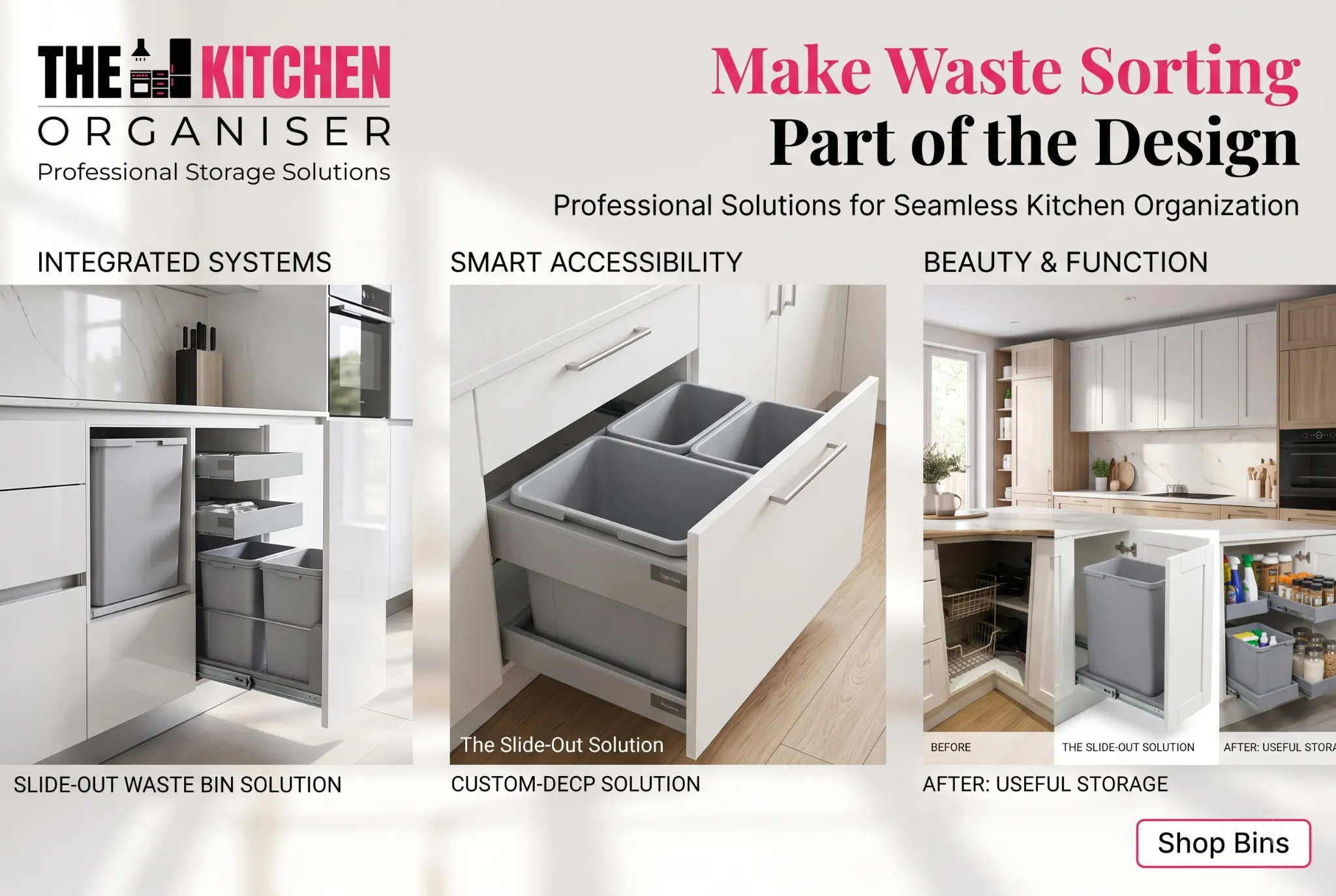
Some households need separate containers for general waste and recycling.
A cabinet system with multiple buckets can allow both waste streams to share the same footprint. The containers do not necessarily need identical capacity.
Observe your household’s waste volume first. If recycling fills twice as quickly as general waste, the available space may be better divided accordingly.
Match the Bin to Cabinet Dimensions
Approximate measurements are not sufficient for integrated storage.
Record:
-
Internal width
-
Usable depth
-
Internal height
-
Door-opening clearance
-
Hinge projection
-
Runner space
-
Nearby plumbing or services
Cupboard bins should be selected from these internal measurements rather than from the nominal cabinet width alone.
Consider the Location in the Kitchen Workflow
A bin cabinet beside the main preparation zone can be more convenient than one several steps away.
Think about where most waste is produced. Vegetable peelings may originate near the sink, while packaging is often opened near the main bench.
Small Distances Matter in Repetitive Tasks
The bin may be opened dozens of times during a busy cooking session.
Place frequent-use storage strategically
Locating the waste system near the work area reduces repeated unnecessary movement. The same principle applies to liners and cleaning cloths, which can be stored nearby if space allows.
Avoid Overloading the Cabinet
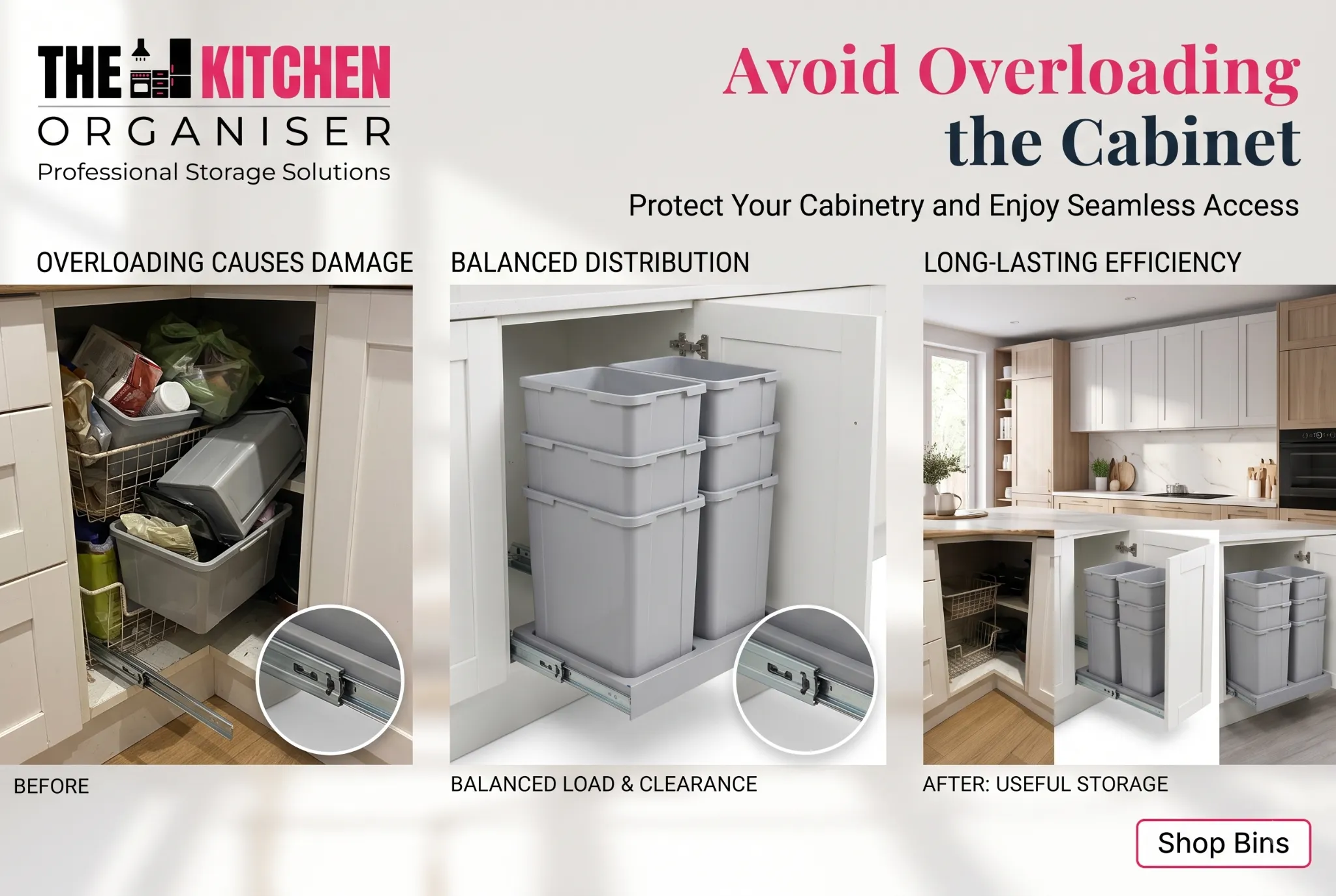
It is tempting to fill every remaining gap around the bin with household products.
However, loose bottles or bags can interfere with the slide mechanism. They can also make cleaning the cabinet more difficult.
A kitchen bin cabinet is more functional when the operating path remains clear. If additional storage is necessary, use compact containers positioned away from moving components.
Think About Cleaning Access
Waste storage should be easy to wipe and maintain.
Removable buckets can simplify cleaning, but there must be enough room above or around them to lift them out. Check this before installation rather than discovering after fitting that the container cannot be easily removed.
Slide out bins also benefit from periodic inspection of the surrounding cabinet so small pieces of rubbish do not accumulate near the runners.
Why Choose Us
Kitchen Organisers offers products aimed at improving how cabinetry is used for storage and waste management. Homeowners can compare built-in bin options according to cabinet size, container capacity and preferred opening method.
For awkward lower cupboards, this dimension-led approach can help turn poorly utilised space into something used repeatedly every day.
About Us
Kitchen Organisers focuses on functional kitchen-storage solutions, including integrated waste systems designed for installation inside cabinetry. The range supports homeowners who want to move frequently used items off the floor and make better use of available cupboard space.
When considering cupboard bins, accurate measurements and realistic household waste habits are the most useful starting points.
Conclusion
An awkward kitchen cupboard does not necessarily need more shelves. Sometimes it needs a better way to access its depth.
A slide-out bin converts hidden cabinet space into a practical waste zone by bringing the container forward. When capacity, dimensions and movement clearance are planned correctly, the result can make daily kitchen routines noticeably simpler.