


Slipping a down comforter inside a duvet cover is one of the oldest bedding shortcuts around, and the short answer to whether it works is yes — it can, and often does. Whether it works well comes down to fit, weight, and how the comforter is built, not just whether it technically fits inside the cover.
For a lot of households, this move is an easy way to protect a favorite comforter, cut down on how often you have to wash something bulky, and refresh the bedroom’s look without buying new bedding entirely. For others, it ends in bunching, gapping corners, or a comforter that overheats once it’s sealed inside a heavier cover. The difference almost always comes down to choosing the right combination.
Comforter vs. Duvet Insert: The Real Difference
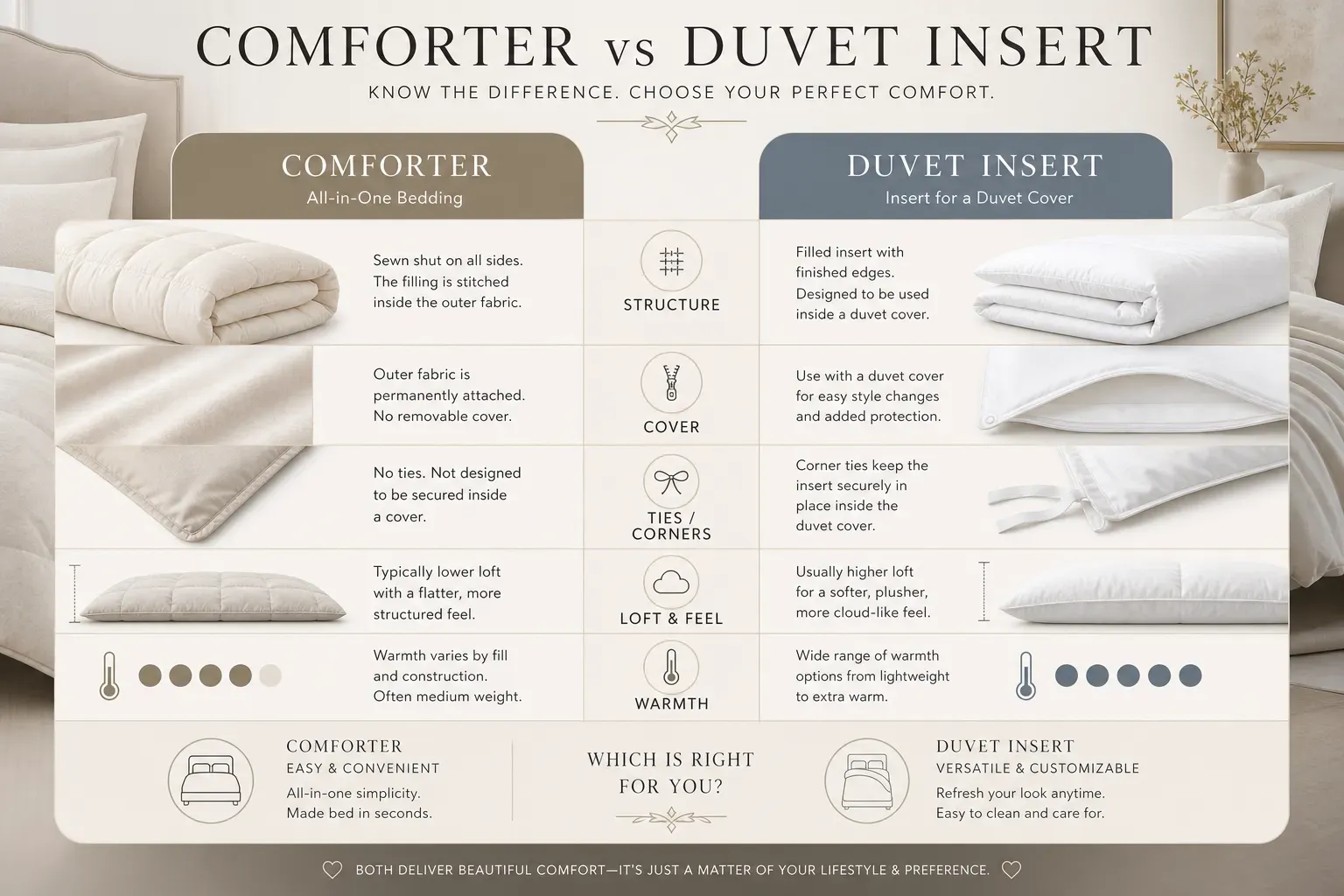
The two terms get used interchangeably, but they’re built for slightly different jobs. A traditional down comforter is often designed to be used on its own — finished edges, a presentable exterior, sometimes decorative stitching. A duvet insert is built specifically to live inside a cover, which usually means more balanced fill distribution, corner loops for securing it in place, and sizing calibrated to match standard duvet covers.
That doesn’t mean a comforter can’t do the job. A high-quality down comforter that already has corner loops, stays evenly filled, and roughly matches your duvet cover’s dimensions will usually behave just like a purpose-built insert. A comforter like the Organic Cotton Goose Down Comforter is a good example of this — it’s finished well enough to use on its own, but the loft and corner loops mean it also slides into a cover cleanly without shifting around.
When Using a Comforter as an Insert Works Well
It works best when the comforter’s dimensions are close to the duvet cover’s — a slight size difference is fine, but a gap of six inches or more tends to cause bunching or empty corners. Texture matters too: a comforter with a bit of grip or internal quilting stays put better than a slippery synthetic shell sliding around inside a crisp cotton or linen cover.
It’s also the more practical choice if your priority is easier upkeep. The cover becomes the washable outer layer, so the comforter itself stays cleaner for longer, which matters for guest rooms, family beds, or anyone trying to protect a more expensive piece of bedding from everyday wear.
When a True Duvet Insert Is the Better Choice
Fit isn’t the only variable — temperature is arguably the bigger one. A cozy comforter sealed inside a heavyweight cover can turn into an overly insulated setup for warm sleepers, while a lightweight insert with a breathable shell can offer far better balance through the night. For hot sleepers specifically, something purpose-built for airflow, like a Luxecool Ultra-Lightweight Cooling Down Blanket, tends to solve the overheating problem that a heavier comforter-inside-a-cover setup often creates.
Corner security is the other common failure point. Many purpose-built inserts include loops that tie directly into a duvet cover’s interior ties, which meaningfully cuts down on shifting. If your comforter has no attachment points, expect to be straightening it more often than you’d like.
Getting the Size Right
Labels like “Queen” or “King” aren’t consistent across brands, so measurements matter more than the tag. As a rough guide: a 0–2 inch difference between comforter and cover usually fits well, 3–5 inches can work depending on loft, and anything beyond 6 inches raises the risk of bunching or visible gaps at the corners. A high-loft goose down comforter also occupies more volume than a flatter fill, so two products with identical dimensions on paper can still feel very different once they’re inside the same cover.
The Easiest Way to Insert It: The Burrito Method
Turn the duvet cover inside out and lay it flat with the opening at the foot of the bed. Place the comforter on top, align the corners, and tie or clip the top corners first. Roll both layers together from the head of the bed toward the foot, then reach into the opening and pull the cover around the rolled bundle before unrolling everything and fastening the bottom closure. It sounds fussier than it is, and it’s especially useful for larger sizes like king and California king, where wrestling a comforter into a cover by hand tends to go wrong.
Style Is Part of the Equation Too
One underrated benefit of this approach is flexibility — you can change the entire mood of a room with a new duvet cover instead of replacing the comforter itself. This matters more with a comforter that’s already a design statement on its own. A silk-shell option like the Silk Goose Down Comforter in the Rosé Garden Edition works well either exposed or tucked into a simple cover, giving you the option to dress the bed up or down depending on the season or occasion.
Keep It or Upgrade?
Stick with your current comforter inside a cover if the measurements are close, it doesn’t shift much, and the warmth feels right for your room. Consider a dedicated insert if the bed consistently looks uneven, the comforter slides around no matter what you try, or you’re too hot or too cold most nights. For a lot of people, the smartest move is incremental — start with a well-fitted, breathable cover, and upgrade the insert once you actually know what warmth level and shell material your sleep habits call for.