

Cleaning upholstery well is a genuine skill, and the products you use play a major role in the final result. Whether you run a professional cleaning business, manage furniture in a commercial space or maintain seating in offices, hotels, waiting rooms and hospitality venues, choosing the right upholstery cleaning products can make the difference between fabric that looks refreshed and fabric that is left dull, over-wet or damaged.
Upholstery is different from hard surfaces and even different from carpet. It is used closely by people every day, absorbs body oils and odours, and often contains delicate fabrics, padding and dyes. This means product choice must be careful. The right upholstery detergent should clean effectively while respecting the fabric, colour and structure of the furniture.
Different Fabrics Have Different Needs
The first thing to understand is that upholstery comes in many different fabrics, and each fabric can respond differently to cleaning. Natural fibres, synthetics, blends and delicate materials all have their own risks. Using the wrong product can lead to shrinkage, colour bleeding, watermarks, texture change or slow drying.
Common upholstery materials include:
-
Cotton blends
-
Polyester
-
Microfibre
-
Wool blends
-
Linen
-
Velvet-style fabrics
-
Leather-look materials
-
Commercial synthetic fabrics
Before cleaning, it is important to understand the fabric type and check care instructions where available. Professional cleaners often test in an inconspicuous area before applying a detergent more broadly. This simple step can help prevent damage and improve confidence in the cleaning process.
Choosing the Right Upholstery Detergent
Choosing a suitable upholstery detergent means balancing cleaning power with fabric safety. A good product needs to lift soil, body oils, stains and odours without being too harsh for the material. This balance is what separates upholstery-specific products from general-purpose cleaners.
Generic cleaners may appear convenient, but they are not always suitable for fabric surfaces. Upholstery products are formulated with fabric cleaning in mind, giving you better control over residue, moisture and fibre safety.
When choosing a detergent, consider:
-
The fabric type
-
The level of soiling
-
Whether odour is present
-
The cleaning method being used
-
Drying time requirements
-
Whether the furniture is used in a commercial setting
-
Whether stain treatment is also needed
The best results come from matching the product to the job rather than relying on one product for every situation.
Matching Product to Cleaning Method
Upholstery can be cleaned using different methods, and the right product often depends on the approach. Some detergents are suitable for hot water extraction, while others are better for low-moisture cleaning. Using a product that matches the method improves results and reduces risk.
For example, heavily soiled commercial chairs may need pre-treatment and extraction, while lightly used office seating may only need low-moisture maintenance cleaning. A knowledgeable supplier can help you select an upholstery cleaner detergent suited to your equipment, fabric and cleaning style.
Common upholstery cleaning methods include:
-
Hot water extraction
-
Low-moisture cleaning
-
Spot treatment
-
Pre-spray and rinse cleaning
-
Hand cleaning for delicate areas
When product and method work together, cleaning becomes more effective, controlled and predictable.
Dilution and Correct Use
Dilution and correct use are essential for good upholstery cleaning outcomes. Many professional products are concentrated, which means they need to be diluted according to label instructions. Using too much product can leave residue, while using too little may reduce cleaning performance.
Residue is a common problem because it can attract soil after cleaning. Upholstery may look clean at first but become dirty again quickly if detergent remains in the fabric. Correct dilution helps avoid this issue and also makes products more economical.
Good practice includes:
-
Reading label directions before use
-
Measuring dilution accurately
-
Avoiding over-application
-
Testing fabric before full cleaning
-
Extracting or wiping thoroughly where required
-
Allowing proper drying time
Product knowledge is just as important as product quality. Even the best detergent can perform poorly if used incorrectly.
Managing Moisture
Managing moisture is one of the most important parts of upholstery cleaning. Over-wetting can cause watermarks, browning, slow drying, odour and even mould risk in the padding. Furniture is often thicker and more absorbent than carpet, so moisture control matters greatly.
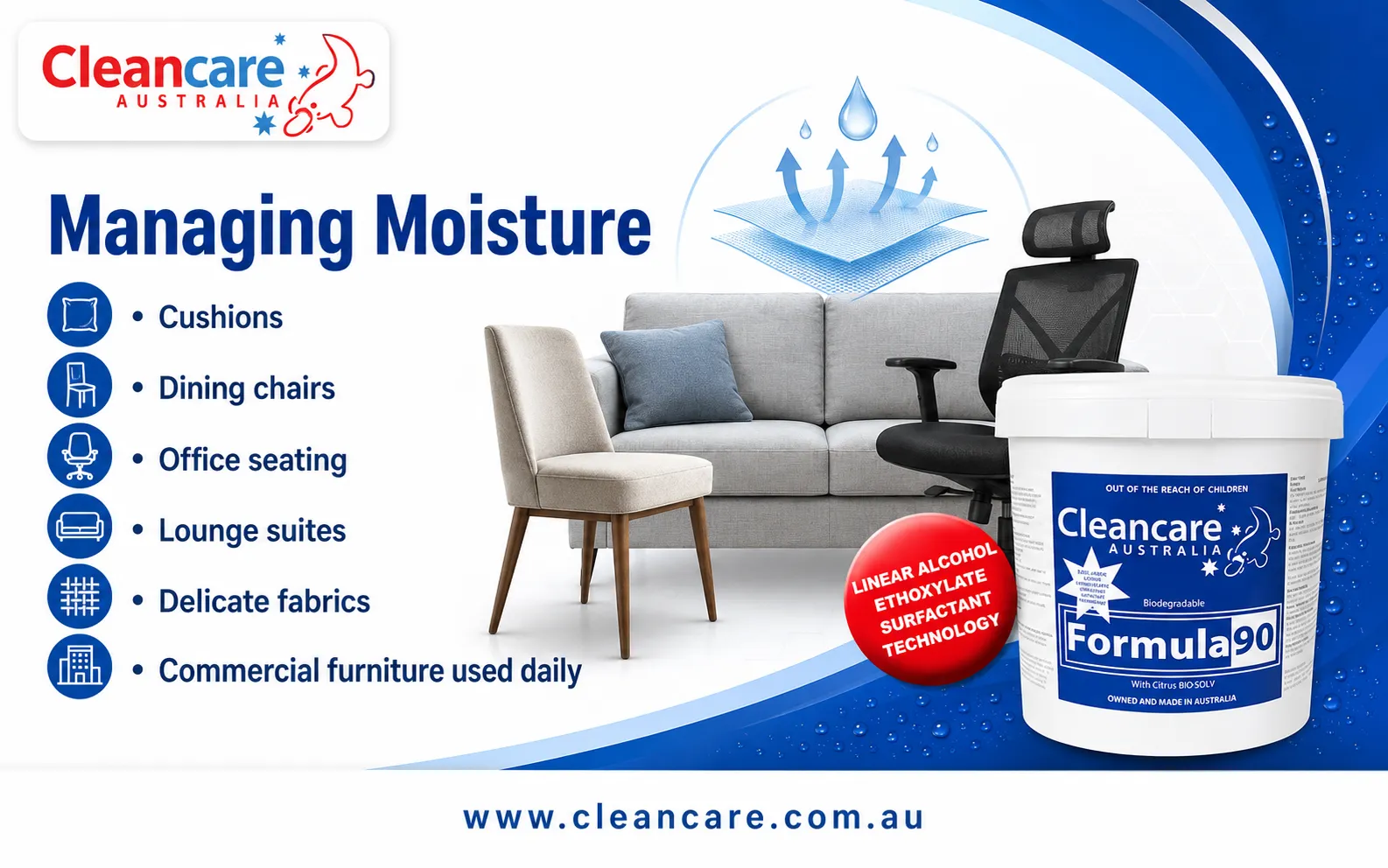
The aim is to use enough solution to clean effectively without saturating the fabric. This is why product choice, application method and extraction technique all matter. A suitable upholstery detergent should support effective cleaning without requiring excessive moisture.
Moisture control is especially important for:
-
Cushions
-
Dining chairs
-
Office seating
-
Lounge suites
-
Delicate fabrics
-
Commercial furniture used daily
Fast, controlled drying helps furniture return to use sooner and reduces the risk of post-cleaning problems.
Dealing With Stains and Odours
Stains and odours often require specialist products alongside general detergents. Coffee, food spills, body oils, makeup, ink and pet-related contamination may all need different approaches. A general detergent can help with everyday soil, but targeted products are often needed for more stubborn marks.
Useful specialist products may include:
-
Fabric spotters
-
Odour control products
-
Protein stain treatments
-
Grease and oil removers
-
Rinse agents
-
Fabric-safe deodorisers
Having the right products available allows cleaners to respond properly instead of overusing a general detergent and hoping for the best. This leads to more consistent results and better customer satisfaction.
Why Quality Products Matter
Quality upholstery cleaning products help protect the furniture while improving cleaning results. In commercial environments, furniture represents a significant investment. Poor cleaning can shorten its life, damage appearance and create unnecessary replacement costs.
Quality products can help with:
-
Better soil removal
-
Safer cleaning on suitable fabrics
-
Reduced residue
-
Fresher-smelling furniture
-
Improved appearance
-
More professional results
-
Better consistency across jobs
The right products support both presentation and long-term furniture care.
Final Thoughts
Achieving great upholstery cleaning results comes down to matching the right products to the fabric, using the correct method, controlling moisture and applying products properly. A thoughtful approach helps avoid common problems and gives furniture a cleaner, fresher and more professional finish.
For anyone choosing upholstery cleaning products, the goal should not be simply to buy a detergent. The goal should be to build a reliable cleaning process that protects fabric, improves appearance and delivers results you can trust.
Why Choose Us
We help customers achieve professional upholstery cleaning results with suitable products for different fabrics and methods. Our range includes detergents designed to balance cleaning power with fabric safety, along with guidance on dilution, moisture control and correct use. Whether you need everyday upholstery detergent or specialist products for stains and odours, we help you choose confidently.
About Us
We are a Melbourne supplier specialising in cleaning products, including professional-grade upholstery cleaning solutions. We understand that great upholstery cleaning depends on product choice, fabric knowledge and correct application. Whether you run a cleaning business or maintain commercial furniture, we help you clean upholstery safely and effectively.
Frequently Asked Questions
Why do I need upholstery-specific products?
Upholstery fabrics vary widely and can be sensitive to harsh products. Upholstery-specific products are designed to clean fabric surfaces while reducing unnecessary risk.
How do I choose the right detergent?
Consider the fabric, the cleaning method, the level of soiling and whether stains or odours are present. A supplier can help match the product to the job.
Why is managing moisture important?
Too much moisture can cause watermarks, slow drying, odour and other problems. Controlled moisture helps leave upholstery clean, fresh and ready to use sooner.
Can you help with stains and odours?
Yes. We offer products for everyday cleaning as well as specialist stains and odour issues, helping you handle a wider range of upholstery cleaning challenges.